Coconut shell is among the most preferred feedstocks for biochar and activated carbon production due to its high lignin content and structural density. However, not all coconut shells are equal in composition or performance. Variations in species, geographic origin, age, and moisture retention capacity directly influence thermal decomposition behavior, carbon yield, and the quality of the final char. In large-scale operations, particularly in a pyrolysis plant, understanding these differences is essential for achieving stable production metrics and maintaining consistent biochar characteristics.
Coconut shells exhibit significant compositional diversity across tropical regions. Factors such as soil mineral content, rainfall, and harvest maturity alter the ratio of lignin, cellulose, and hemicellulose within the shell. Typically, mature coconut shells contain 35–45% lignin and 30–35% cellulose, offering high fixed carbon potential. Younger shells, by contrast, possess more volatile matter and lower density, which affects char stability after pyrolysis.
Species differences are also evident. For example, Pacific and Southeast Asian varieties tend to have thicker shells and denser cellular structures than those from Africa or the Caribbean. The increased density leads to slower devolatilization rates but higher char yield. These microstructural variations determine how efficiently heat is distributed within the reactor, influencing energy consumption and retention time.
The carbonization profile of coconut shell is governed by its decomposition stages. The process begins with moisture evaporation below 150°C, followed by the breakdown of hemicellulose and cellulose between 250°C and 400°C. Lignin decomposition extends beyond 600°C, providing structural integrity to the residual char. When shell density or thickness varies, so does the rate of volatile release, leading to disparities in heating efficiency and product uniformity.
In a continuous coconut charcoal making machine, this discrepancy manifests as uneven temperature gradients and fluctuating gas composition. Denser shells require prolonged residence time to achieve complete carbonization, whereas lightweight varieties risk over-carbonization or partial oxidation if the same parameters are applied. Thus, adaptive temperature zoning and residence-time calibration are essential to accommodate feedstock variability.
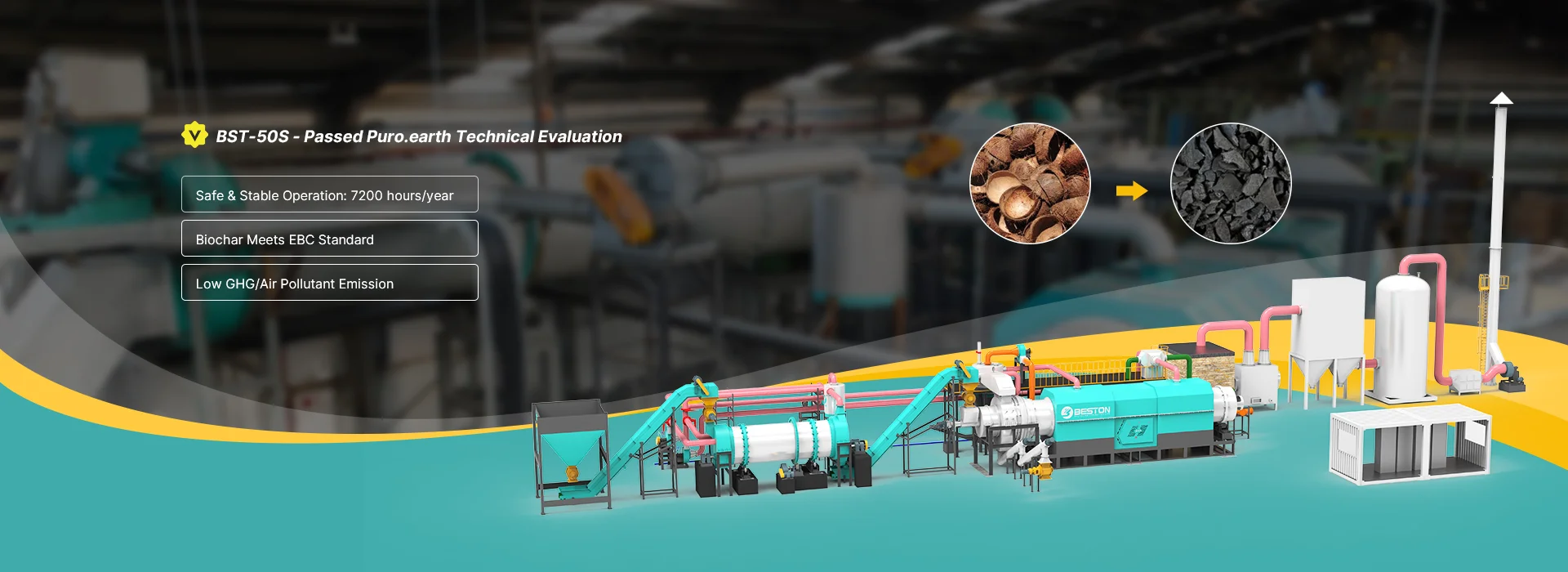
The yield of coconut shell char typically ranges between 28% and 35% of the dry feed weight. However, feedstock variation can push this figure outside the optimal range. High-lignin shells yield denser char with fixed carbon content exceeding 75%, suitable for both energy storage and adsorption applications. Low-lignin or high-volatile shells generate more tar and gaseous by-products, reducing the overall yield and altering the carbon-to-hydrogen ratio.
Ash content is another differentiating factor. Shells harvested from saline coastal soils contain higher mineral residues, particularly sodium and potassium oxides, which act as catalysts during pyrolysis. These elements accelerate secondary reactions, sometimes reducing char porosity and compromising its adsorption performance. To ensure product uniformity, feedstock pre-sorting or blending is often implemented in industrial-scale operations of carbonization machine.
The energy demand for carbonizing coconut shells depends heavily on their bulk density and moisture equilibrium. High-density shells exhibit greater thermal inertia, requiring longer heating durations but ensuring higher conversion efficiency once the process stabilizes. Conversely, lightweight or fibrous shells absorb heat rapidly but tend to release volatiles in bursts, leading to localized temperature spikes.
Modern pyrolysis plants mitigate these inconsistencies through indirect heating systems, staged air injection, and real-time process control. By maintaining steady-state thermal conditions, operators can minimize energy loss and avoid premature burnout of lighter fractions. Integrating waste-heat recovery systems further enhances energy utilization, particularly when processing mixed coconut shell batches.
The physical and chemical characteristics of the resulting biochar determine its downstream value. Char derived from dense shells usually exhibits higher surface area, lower ash content, and superior mechanical strength—qualities favorable for activated carbon production and metallurgical reductants. Lighter-shell char, though less dense, provides higher microporosity, making it more effective for soil enhancement and carbon sequestration applications.
The hydrogen-to-carbon ratio (H/C) and the polycyclic aromatic hydrocarbon (PAH) concentration also vary with feedstock type. Maintaining a low H/C ratio and controlling PAH formation require precise temperature regulation and efficient gas condensation systems. This precision not only defines biochar quality but also ensures compliance with international certification standards, particularly for carbon removal credits.
Optimizing the carbonization of diverse coconut shells calls for feedstock standardization and reactor calibration. Establishing supply chain traceability, implementing controlled drying processes, and defining feedstock quality parameters can significantly enhance yield predictability and energy performance. Continuous data collection on shell origin, density, and mineral content helps refine process models for consistent operation.
In essence, the profitability and stability of coconut shell carbonization depend not solely on technology but on material science. By aligning feedstock management with the thermochemical dynamics of the pyrolysis process, producers can achieve high-quality biochar output, improved reactor longevity, and more efficient use of renewable biomass resources.


