Coconut shell charcoal production through pyrolysis is an increasingly adopted practice across tropical regions due to its sustainability and high carbon yield. However, alongside the benefits of this renewable carbonization pathway lies a persistent challenge—dust generation. The fine particulate matter produced during the handling, crushing, and carbonization of coconut shells can affect operational efficiency, worker safety, and environmental compliance. Effective dust management in a pyrolysis plant is therefore critical to ensuring clean, stable, and compliant operations.
Dust generation occurs throughout the production cycle of coconut shell charcoal. During feedstock preparation, shells are mechanically crushed to uniform sizes for optimized pyrolysis. This mechanical process releases fine organic particulates into the air, which, if not properly contained, accumulate around equipment and within processing zones.
The second stage of dust formation happens during carbonization. As the coconut shells undergo thermal decomposition in the pyrolysis reactor, fine carbon particles and ash can escape with the flue gases, especially when exhaust systems are not adequately filtered. Additionally, post-pyrolysis handling—such as unloading, cooling, and sieving the produced charcoal—can release significant amounts of carbon dust if containment and ventilation are insufficient.
Dust is not merely an aesthetic or housekeeping concern. In a coconut charcoal making machine, it poses tangible operational and safety risks. Fine carbonaceous particles are highly combustible; when suspended in the air at sufficient concentrations, they create an explosive atmosphere. A single ignition source can trigger a deflagration event, leading to damage to equipment and severe safety hazards for plant personnel.
Prolonged dust exposure also affects air quality in and around the facility. Workers may suffer respiratory irritation, while nearby communities may experience particulate dispersion that violates local environmental regulations. Furthermore, accumulated dust can settle on mechanical and electrical components, impairing their efficiency and accelerating wear and tear. For these reasons, robust dust suppression systems are integral to modern coconut shell charcoal production lines.
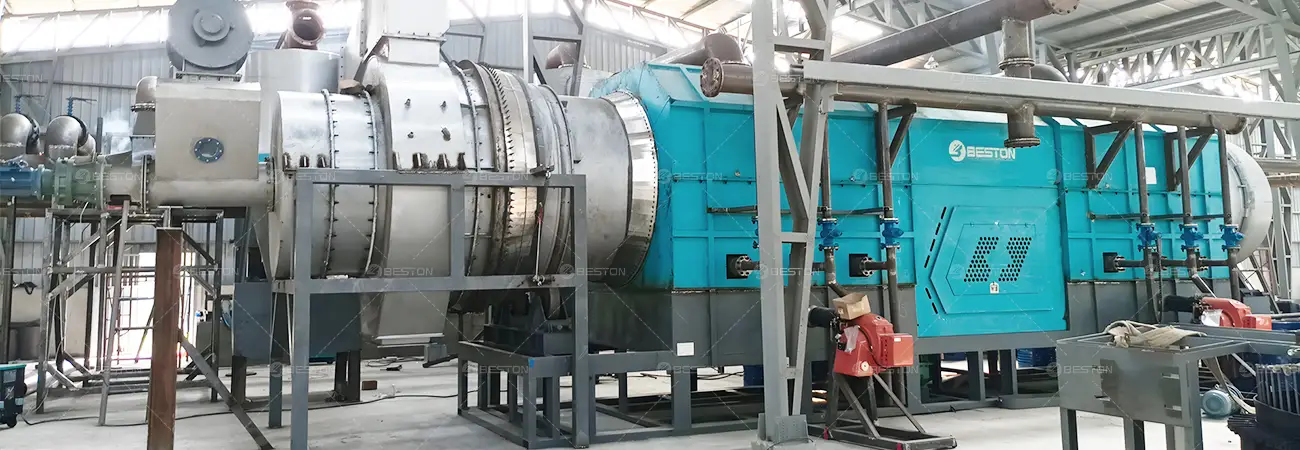
One of the most effective ways to minimize dust emission is through the enclosure of material transfer and crushing points. Closed conveyors, sealed feeding hoppers, and covered discharge systems prevent particulate matter from escaping during the movement of coconut shells and charcoal. Enclosures can be combined with localized ventilation to capture and redirect airborne particulates toward filtration units.
Filtration technology plays a central role in dust mitigation. Cyclone separators are commonly installed in the exhaust line of a carbonization machine to remove coarse particles from flue gases. For finer particulates, baghouse filters or cartridge collectors are employed. These systems utilize fabric membranes to trap microscopic carbon dust before the air is released into the environment. Regular maintenance of these filters ensures consistent airflow and prevents clogging that can lead to backpressure issues.
In high-temperature operations where fine particulates and volatile compounds coexist, wet scrubbers are used to clean the exhaust stream. The process involves passing flue gases through a liquid medium—usually water or a chemical solution—where dust particles are absorbed or neutralized. Wet scrubbing not only suppresses dust but also captures other gaseous pollutants, contributing to cleaner emissions from the pyrolysis plant.
Post-carbonization dust can be effectively managed by integrating a cooling and briquetting system. Charcoal particles are cooled and compressed into briquettes, reducing loose carbon fines and improving material stability. Briquetting also enhances product uniformity and reduces loss during packaging and transportation.
For large-scale installations, electrostatic precipitators (ESPs) provide a highly efficient dust control method. These devices use electrically charged plates to attract and collect dust particles from exhaust gases. The collected particulates can then be recycled or safely disposed of. ESPs are particularly effective for managing ultrafine particles that may bypass conventional mechanical filters.
Effective dust control measures offer tangible environmental and economic advantages. Cleaner operations reduce the emission of particulate matter, helping the facility comply with air quality regulations and minimizing its environmental footprint. Moreover, recovered carbon dust can often be reintegrated into the production cycle, either as a briquette additive or as a raw material for activated carbon manufacturing—turning a waste stream into a revenue opportunity.
From an operational perspective, dust suppression extends equipment lifespan, reduces maintenance downtime, and enhances workplace safety. A clean and well-ventilated production environment also fosters higher worker morale and efficiency, contributing to overall productivity gains.
Coconut shell charcoal production is positioned as a key contributor to sustainable energy and carbon removal initiatives. However, its environmental credentials depend on rigorous process control—including effective dust management. By implementing a combination of engineering controls, filtration technologies, and safe handling practices, a pyrolysis plant can achieve both operational efficiency and environmental responsibility. In the evolving landscape of biomass valorization, mastering dust control is not just an operational necessity—it is a benchmark of industrial maturity and ecological stewardship.


