Tire-derived feedstock contains rubber polymers, reinforcing fillers, steel wires, and various additives. The proportion and distribution of these components significantly influence carbon black yield during thermal decomposition. To maximize recovery in a pyrolysis plant, feedstock quality must be standardized. Removing embedded steel before processing prevents mass displacement and ensures a more consistent thermal profile. Uniform shredding enhances heat penetration, allowing the rubber matrix to decompose without creating unconverted pockets. Smaller particle size also accelerates the volatilization of organic fractions, leaving behind a higher mass of solid carbon residue.
Rubber blends with elevated natural rubber content tend to produce more carbonaceous solids, while high synthetic rubber content may promote volatilization. Strategic feedstock blending can therefore regulate the carbon black yield in commercial settings.
Temperature is the primary determinant of carbon black formation. Tire pyrolysis plant typically requires a thermal window between 450°C and 600°C. Operating at the lower end of this range suppresses excessive cracking of the carbonized matrix, while the upper end ensures complete volatilization of oils and gases. Maintaining a narrow temperature band prevents the carbon residues from undergoing secondary reactions that reduce mass, such as gasification or over-cracking.
Uneven thermal distribution introduces hot spots that degrade the carbonized structure. Excess heat produces ash or partial oxidation residues instead of recoverable carbon black. Advanced heating systems, precise insulation, and well-calibrated rotation or mixing mechanisms ensure uniformity. Steady-state heat transfer across the reactor bed significantly stabilizes char yield.
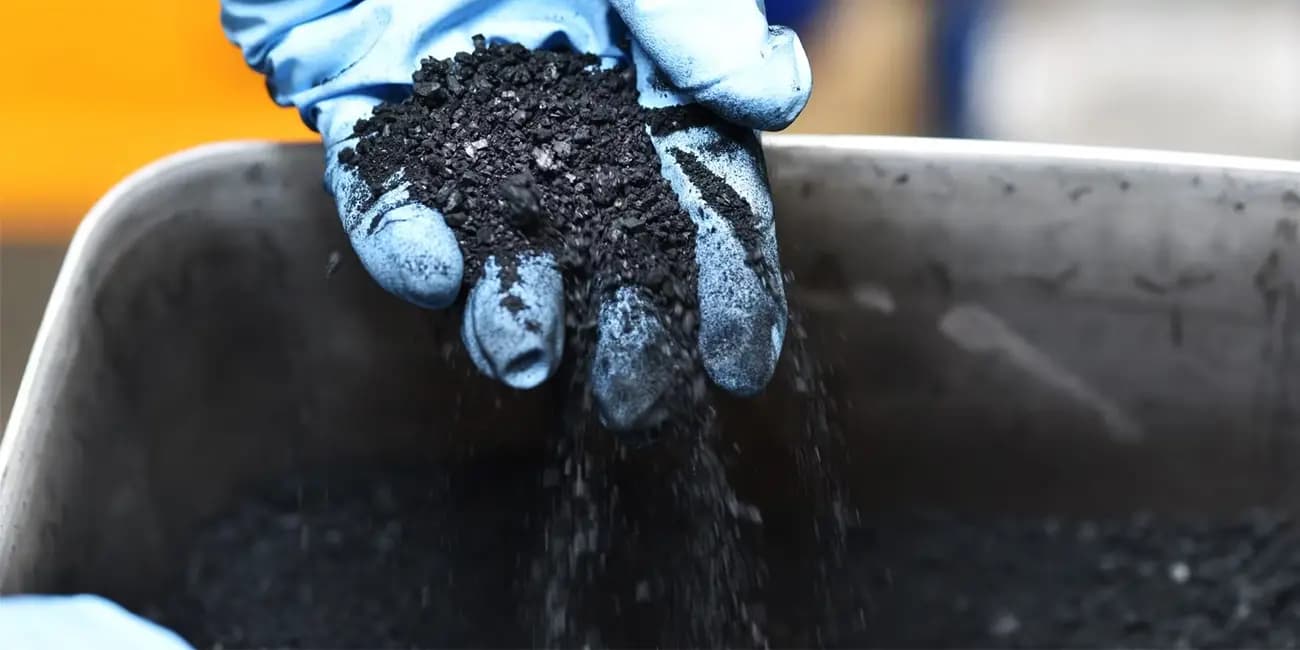
The time that tire fragments remain inside the reactor determines the degree of carbonization. Extended residence time facilitates thorough devolatilization, leaving behind a denser carbon matrix. However, excessive retention can initiate secondary reactions that diminish yield. Optimizing retention involves balancing thermal exposure with volatilization kinetics. A modern tire pyrolysis plant often uses automated feed control to stabilize residence time and prevent back-mixing, which could otherwise dilute carbonization efficiency.
Rapid extraction of volatiles prevents their recondensation within the char matrix. If vapors accumulate, they may dissolve or soften the carbonized surfaces, reducing structural integrity and final mass. Efficient vapor-flow engineering—including vacuum assistance and streamlined vapor pathways—ensures the carbonization process reaches its full potential.
Mineral additives embedded in tire formulations can either enhance or impede carbon black formation. High zinc oxide content, for instance, may catalyze certain cracking reactions that influence char morphology. Sulfur crosslinks, when broken during pyrolysis, affect the distribution of micropores within the carbon matrix. Understanding these chemical interactions allows operators to predict yield more accurately and adjust feedstock blends accordingly.
In some cases, controlled introduction of stabilizing additives can promote carbon retention. These additives suppress excessive radical reactions, preserving the integrity of the carbonized residue.
Continuous reactors provide superior thermal stability and more predictable carbon black yield. Batch reactors, due to fluctuating temperature cycles, often generate inconsistent residue mass. A continuous pyrolysis plant maintains constant heat flux and steady feed characteristics, both of which support higher carbon black output.
Uniform mechanical agitation enhances heat transfer and minimizes clumping. Tire particles tend to form agglomerates during thermal softening. Proper mixing breaks these clusters and exposes greater surface area to the heat source. The result is more complete devolatilization and higher carbon residue mass.
The method used to extract char from the reactor impacts yield. High-temperature discharge can oxidize the carbon instantly, leading to avoidable losses. Cooled discharge systems or inert-gas protection maintain carbon integrity during ejection.
Post-processing steps such as magnetic separation remove residual steel without taking carbon particles with it. Accurate sieving ensures that fine carbon particles are not lost in oversized fractions. Optimized separation workflows increase recoverable carbon black without altering reactor performance.


