Coking, or the undesired formation of carbonaceous deposits during thermal decomposition, presents a critical operational issue in the processing of oil sludge. In a pyrolysis plant, persistent coking compromises heat transfer, restricts flow channels, and accelerates maintenance intervals. These complications not only reduce processing efficiency but can also cause unplanned shutdowns, lowering the economic return of the system. Reducing coking tendencies requires a multifaceted strategy involving feedstock conditioning, reactor design, temperature control, and catalytic influence.
Oil sludge is a heterogeneous mixture composed of hydrocarbons, water, solids, and metal oxides. The high moisture and inorganic content are primary contributors to coking in oil sludge pyrolysis plant. Preconditioning must start with dewatering — either through centrifugation, filtration, or thermal drying. Reducing water content below 15% significantly curbs uneven heating and localized thermal spikes, both of which initiate coke formation.
Additionally, removing heavy metal ions such as iron, nickel, and vanadium through chemical treatment or magnetic separation minimizes catalytic coke formation during the high-temperature phase of pyrolysis. Solid particles, particularly those from drilling waste, act as nucleation sites for coke buildup and must be filtered prior to thermal entry.
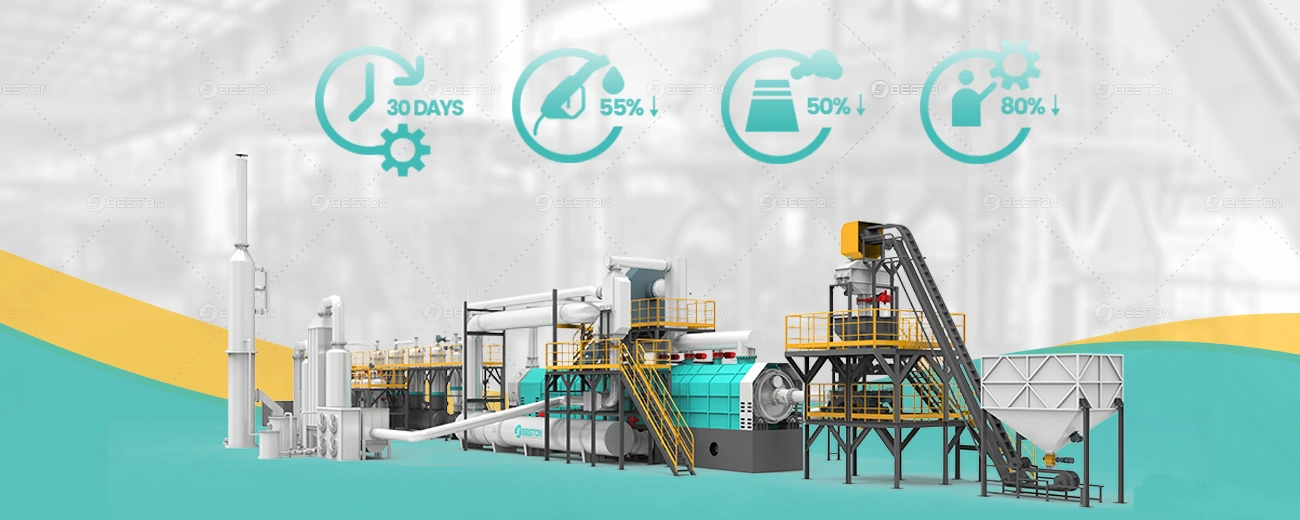
A continuous pyrolysis plant equipped with a horizontal rotary kiln or a screw-type reactor ensures consistent motion of material, avoiding the stagnant zones where coke typically accumulates. Smooth internal surfaces and reduced angular geometries help prevent sediment adherence and thermal layering.
Proper residence time management is also essential. Excessive exposure to high temperatures without material movement leads to localized overcracking, encouraging heavy polyaromatic hydrocarbons that deposit on surfaces. Ensuring a uniform flow profile inside the reactor and matching residence time to reaction kinetics mitigates this issue.
Coke formation accelerates sharply when oil sludge is subjected to abrupt or uneven heating. A staged temperature gradient, usually progressing from 300°C to 500°C across reactor zones, allows for progressive volatilization of organics without inducing surface carbonization.
Infrared thermal sensors, paired with automated heating elements, enable real-time adjustments in thermal load based on feed composition and mass throughput. Avoiding temperature overshoots in the mid-pyrolysis zone is especially critical, as this is where most coke precursors are formed.
Introducing catalytic materials into the reactor bed or co-processing with clay minerals (such as bentonite or kaolinite) can significantly reduce coking. These substances alter the decomposition pathway of heavy hydrocarbons, promoting formation of lighter fractions and suppressing polymerization.
Inert fillers like silicon carbide and ceramsite also serve dual roles as heat carriers and anti-coking media by maintaining thermal uniformity and physically abrading early-stage coke layers before they harden. Their use extends operating cycles between cleanings and maintains surface reactivity.
In a pyrolysis environment, controlling the atmosphere inside the reactor is paramount. Maintaining an inert environment, often by recycling non-condensable gases like methane and hydrogen, prevents oxidation of volatiles and subsequent coke formation. Gas velocity should be high enough to sweep volatile organics from the hot zone quickly, avoiding secondary condensation and polymerization.
Advanced flow dynamics, supported by computational fluid dynamics (CFD) modeling, allow for fine-tuned reactor performance where gas velocity profiles are calibrated to prevent back-mixing and hot spot development.
Surface treatment of the internal reactor wall with anti-coking coatings such as ceramic or high-chromium alloys reduces the surface energy available for coke adhesion. Material selection must balance chemical inertness with thermal conductivity, ensuring rapid heat transfer while resisting corrosion from acidic intermediates.
Using corrosion-resistant stainless steel or alloy linings with low roughness values helps maintain clean reactor walls over prolonged use.


