Charcoal production has evolved from rudimentary earth kilns to highly engineered thermal conversion systems. This evolution has intensified regulatory oversight. Compliance is no longer limited to product quality; it now spans environmental protection, worker safety, feedstock legality, and emissions control. Each production facility must align technical operations with an expanding matrix of standards. For facilities operating a pyrolysis plant, compliance expectations are particularly exacting due to the scale, energy density, and byproduct profiles involved.
Charcoal production machine is regulated under multiple legal domains, often simultaneously. These include forestry law, industrial permitting, air-quality regulation, and waste management statutes.
Manufacturers are typically required to obtain operating licenses that specify allowable production capacity, technology type, and geographic scope. Permits often mandate disclosure of reactor design, thermal efficiency, and emissions abatement measures.
Short permitting cycles may appear manageable. Long approval timelines, however, can delay commissioning and increase capital exposure.
Charcoal destined for export must satisfy customs classifications, phytosanitary controls, and sustainability declarations. Misalignment between domestic production standards and importing country requirements frequently creates hidden compliance risks.
Feedstock integrity is a cornerstone of compliant charcoal production. Regulators increasingly scrutinize biomass origin to prevent illegal logging and ecosystem degradation.
Producers must document that wood feedstock is harvested legally and in accordance with land-use regulations. Chain-of-custody records, harvesting permits, and transport documentation are commonly required.
Inconsistent documentation undermines compliance, regardless of production efficiency.
Beyond legality, many jurisdictions impose sustainability thresholds. These may include replanting obligations, residue utilization mandates, or limits on whole-tree harvesting. Compliance frameworks often require periodic audits to verify adherence.
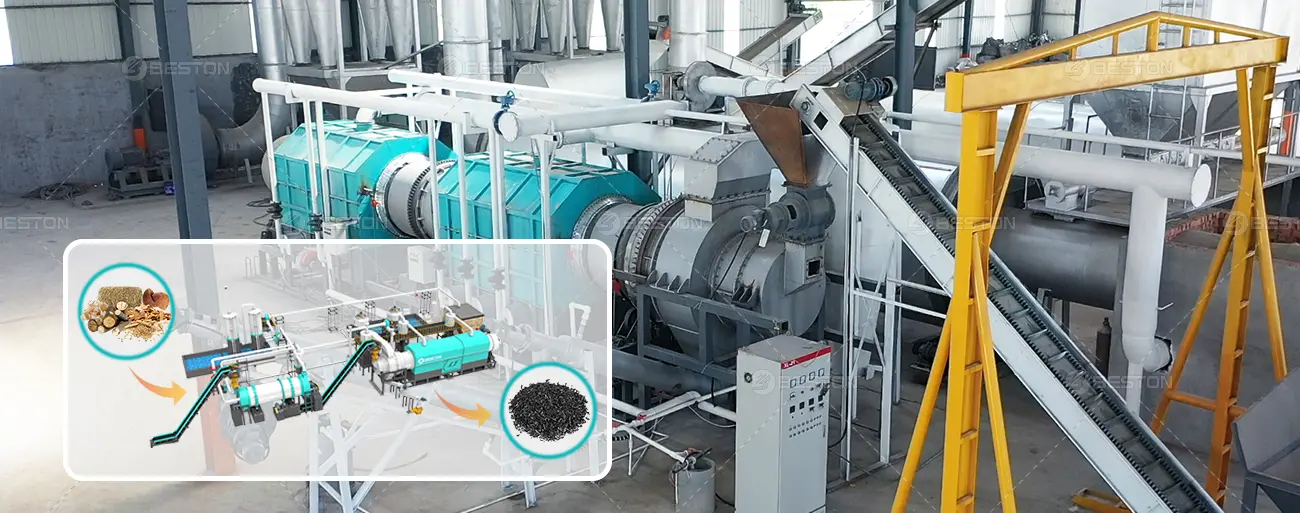
Charcoal production relies on controlled thermal decomposition. Regulators focus closely on how this process is managed.
Traditional kilns face increasing restrictions due to uncontrolled emissions. Enclosed reactors and continuous systems are favored for their predictability and containment. A biomass pyrolysis plant must demonstrate uniform temperature distribution, sealed operation, and pressure management.
Incomplete carbonization produces volatile-rich charcoal, which poses safety and emissions risks. Excessive heat, by contrast, increases ash content and energy loss.
Compliance requires documented control of heating curves, peak temperatures, and residence time. These parameters are often reviewed during inspections.
Air-quality regulation represents one of the most demanding compliance domains for charcoal producers.
Charcoal production emits particulate matter, carbon monoxide, volatile organic compounds, and condensable tars. Each category may be subject to separate limits.
Facilities must demonstrate that emissions remain below regulatory thresholds during both steady-state operation and transient events such as startup or shutdown.
Cyclones, thermal oxidizers, condensers, and scrubbers are commonly required. Their performance must be validated through periodic stack testing and continuous monitoring.
Failure of abatement equipment is treated as a compliance breach, even if production output remains within specification.
Charcoal production generates byproducts that fall under waste regulations if not properly managed.
Liquid condensates often contain phenolics and organic acids. Disposal without treatment may violate hazardous waste rules.
Compliant facilities implement controlled collection, neutralization, or energy recovery pathways to manage these streams responsibly.
Ash and charcoal fines must be characterized chemically before disposal or reuse. Some jurisdictions permit land application under strict conditions. Others classify these materials as industrial waste, requiring licensed disposal.
Worker safety compliance is integral to production licensing.
Charcoal production environments present risks from high temperatures, flammable gases, and dust explosions. Safety protocols must address reactor access, gas monitoring, and fire suppression.
Short procedural gaps can result in serious incidents. Long-term compliance depends on systematic training and enforcement.
Safety compliance requires written risk assessments, maintenance schedules, and incident-response plans. Regulators may conduct unannounced inspections, reviewing both physical conditions and documentation quality.
Charcoal must meet defined specifications depending on its end use.
Moisture content, fixed carbon percentage, ash level, and calorific value are commonly regulated. Non-compliant product batches may be subject to recall or disposal.
Packaging often must disclose origin, composition, and intended use. Inaccurate labeling is treated as a regulatory offense, particularly in consumer markets.
Compliance does not end with operational alignment. Continuous oversight is required.
Modern facilities deploy digital monitoring systems to log temperatures, emissions, and throughput. These records support regulatory reporting and audit defense.
Many jurisdictions require records to be retained for multiple years. Loss of historical data can trigger penalties, even if current operations are compliant.
Charcoal production compliance is multi-dimensional. It spans legal authorization, sustainable sourcing, controlled thermal processing, emissions abatement, waste handling, and worker safety. When these elements are integrated into facility design and daily operations, regulatory risk diminishes.
A well-managed pyrolysis plant exemplifies this integration, demonstrating that technical discipline and regulatory adherence can coexist without compromising production efficiency or product quality.


