Sulfur reduction in tire-derived pyrolysis oil is essential to improve its market value, environmental compliance, and combustion performance. High sulfur levels contribute to harmful emissions such as sulfur oxides (SOx), which are regulated under stringent air quality standards. Optimizing the pyrolysis process and incorporating post-treatment methods can effectively lower sulfur content, creating a cleaner, more commercially viable fuel product.
The configuration of a tyre pyrolysis plant plays a critical role in influencing sulfur retention in the oil fraction. Feedstock preparation is the first step—removing steel wires and surface contaminants from waste tires minimizes inorganic sulfur introduction. Pre-drying the feedstock prevents excessive water vapor from affecting the cracking equilibrium.
Reaction temperature control is another key factor. Operating in the optimal thermal decomposition range, generally between 450°C and 550°C, promotes selective breakdown of long-chain hydrocarbons while avoiding the formation of unstable sulfur-bearing volatiles. Extended residence time in the reactor should be avoided, as prolonged secondary cracking can concentrate sulfur compounds in the oil phase.
Micro-oxygen conditions during pyrolysis can also assist in partial oxidation of volatile sulfur species, shifting them toward the non-condensable gas stream instead of the oil. However, maintaining this balance requires precise control to prevent full combustion.
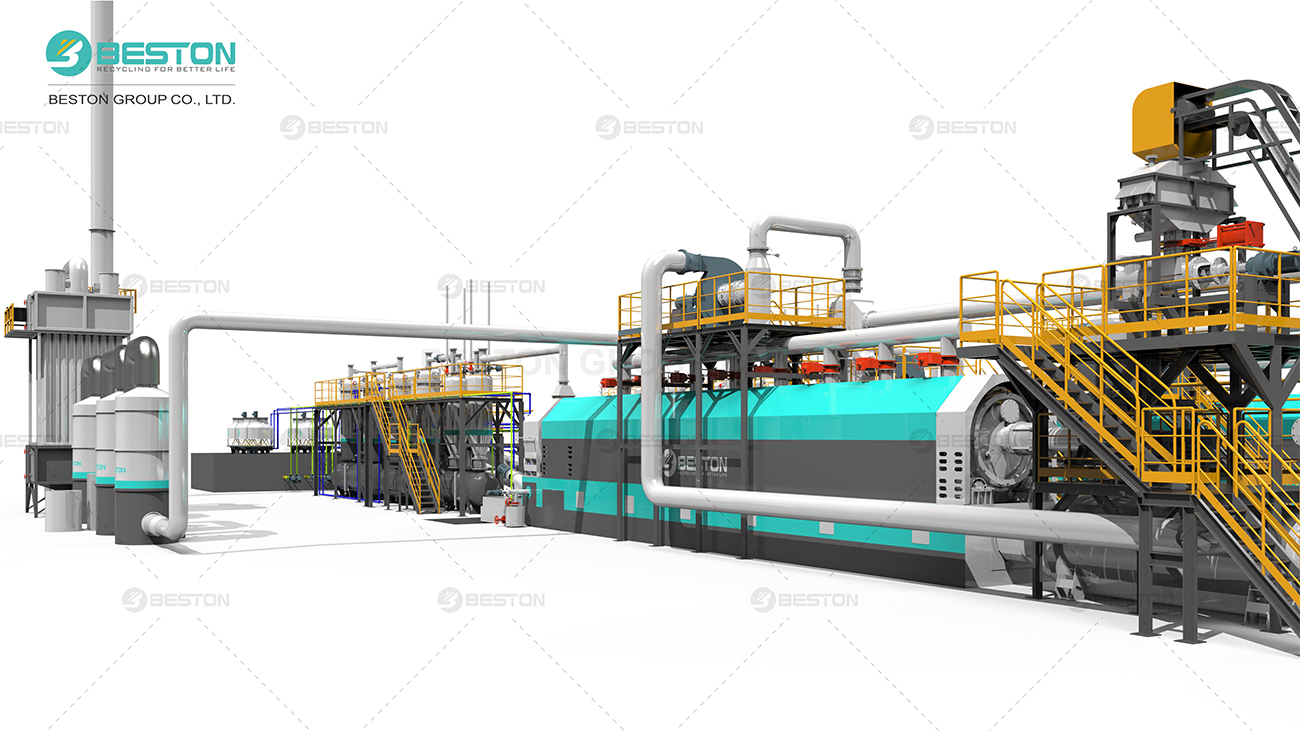
Introducing desulfurization catalysts directly into the pyrolysis machine offers an in-situ reduction strategy. Metal-based catalysts such as nickel, cobalt-molybdenum, or zinc oxide promote the cleavage of carbon-sulfur bonds at lower activation energies. These catalysts can also facilitate hydrogenation reactions that convert thiophene-type compounds into less stable species, which then migrate to the gas fraction.
The choice of catalyst support material—such as activated alumina or silica—can influence pore structure and dispersion, enhancing contact between reactants and active sites. Regular regeneration of the catalyst bed ensures long-term efficiency, preventing fouling from carbonaceous deposits.
After initial recovery from the pyrolysis plant, the crude oil can undergo secondary purification. One widely adopted method is hydrodesulfurization (HDS), which uses hydrogen under elevated temperature and pressure in the presence of a catalyst to convert organosulfur compounds into hydrogen sulfide gas. This gas is then removed via scrubbing.
Adsorption techniques can also be applied at lower operational complexity. Materials such as activated carbon, zeolites, or mesoporous silica selectively bind sulfur-containing molecules. While adsorption has limited capacity, it offers a cost-effective solution for small-scale operations or as a polishing step after catalytic upgrading.
Solvent extraction represents another viable approach, particularly for oils containing a high proportion of aromatic sulfur species. Polar solvents like acetonitrile or dimethylformamide selectively dissolve these compounds, enabling phase separation.
For optimal results, a hybrid approach often yields the highest sulfur removal efficiency. Combining in-situ catalytic desulfurization with post-treatment adsorption or hydrogenation allows for staged reduction, minimizing both refractory and volatile sulfur compounds.
Automation and continuous monitoring systems within the pyrolysis plant further ensure stable sulfur control. Real-time gas chromatography and sulfur analyzers provide immediate feedback, enabling dynamic adjustment of operational parameters.
Producing low-sulfur tire-derived pyrolysis oil not only meets regulatory requirements but also broadens the potential application scope. Low-sulfur oil can be blended with conventional fuels for marine or industrial use without exceeding emission thresholds. Moreover, reduced sulfur improves storage stability, lowers odor intensity, and enhances combustion efficiency.
By implementing tailored sulfur reduction strategies—spanning feedstock preparation, catalytic enhancement, and post-pyrolysis upgrading—operators can significantly elevate the quality and market competitiveness of tire-derived fuel products. This integrated methodology aligns operational efficiency with environmental stewardship, ensuring a sustainable pathway for waste tire valorization.


