Thermal desorption is a controlled heating process that mobilizes hydrocarbons from oil-laden sludge, enabling the reclamation of valuable constituents while rendering the residual solids inert. The technique leverages heat transfer and phase-change mechanics to separate organics from mineral matrices. A TDU functions as the primary system architecture for achieving this separation at scale, combining indirect heating, vapor management, and solid–gas segregation.
Oil sludge is heterogeneous. It contains water, fine particulates, heavy hydrocarbons, and volatile fractions. High viscosity and variable composition complicate conventional remediation. Thermal desorption addresses this challenge by applying incremental heat to drive off volatile and semi-volatile hydrocarbons without combusting the substrate. The process preserves hydrocarbon integrity while reducing hazardous characteristics.
Heat stimulates hydrocarbon volatilization. When sludge is introduced into a rotating or stationary vessel within a thermal desorption unit, it encounters increasing temperatures, typically ranging from 200°C to 550°C depending on the targeted hydrocarbon profile. At these temperatures, organic compounds transition into vapor, while the inorganic solids remain structurally stable.
Short sentences emphasize the fundamentals. Heat induces separation. Vapor carries hydrocarbons away.
The desorption threshold varies with molecular weight. Light hydrocarbons vaporize early, whereas heavier fractions require prolonged residence and precise temperature control. The efficiency of the process depends on maintaining a uniform thermal gradient across the sludge bed and ensuring adequate agitation or mixing to prevent localized overheating.
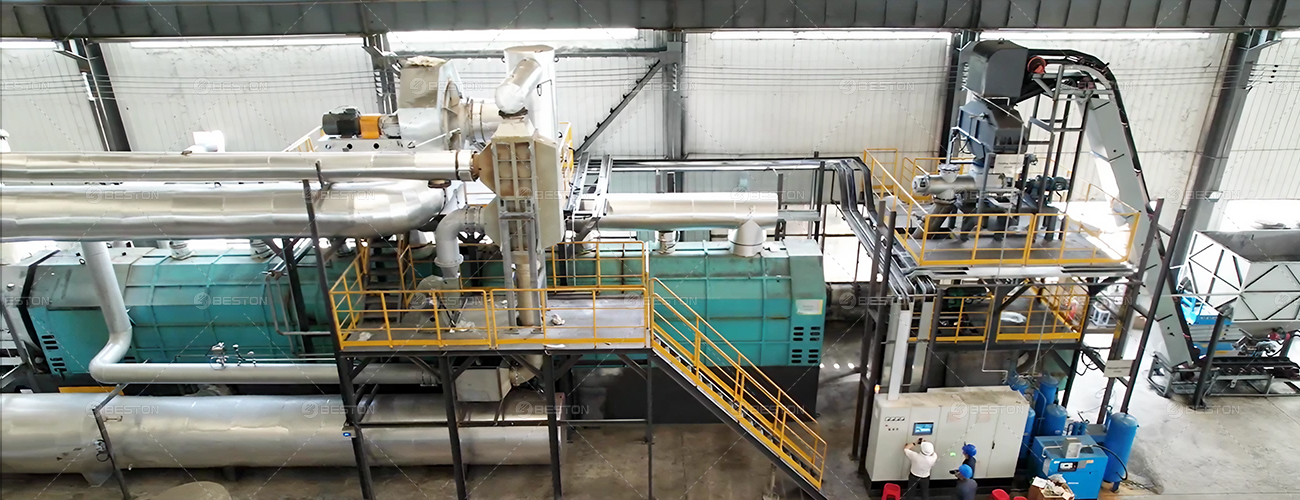
A TDU relies on indirect thermal input to prevent oxidation. The heating source—often natural gas, diesel, or recovered syngas—raises the temperature of the reactor wall or internal heat-transfer surfaces. The sludge never contacts flame, ensuring controlled volatilization without degradation of recovered hydrocarbons.
This indirect design differentiates the system from incineration, where hydrocarbons are burned instead of reclaimed.
The vapor stream exiting the desorption chamber contains a mixture of vaporized hydrocarbons, water vapor, and trace particulates. It is routed through a multi-stage condensation system where the temperature is progressively reduced. As temperature drops, hydrocarbons and water condense at different points due to their distinct vapor-pressure characteristics.
This approach ensures that maximum hydrocarbon mass is collected while meeting emissions standards.
The desorbed solids, after losing moisture and hydrocarbon content, exhibit reduced toxicity and diminished volatility. Their residual hydrocarbon concentration typically falls below regulatory thresholds for non-hazardous material. The solids become suitable for reuse in construction fill, road base, or land reclamation, depending on local compliance requirements.
Short sentences highlight the transformation. Residue becomes stabilized. Environmental risks diminish.
The mechanical design of the discharge system—whether screw, auger, or gravity-fed—maintains isolation from oxygen to avoid recontamination or ignition during cooling.
Moisture level dictates heating efficiency. High-water-content sludge requires more energy to reach desorption temperature due to steam generation. Pre-drying or mechanical dewatering minimizes energy expenditure. Particle size also influences heat penetration. Finer materials heat uniformly, whereas coarse aggregates demand longer residence or more aggressive agitation.
These measures increase throughput and reduce operational burdens.
Modern TDU systems incorporate multiple heating zones. Each zone targets specific hydrocarbon fractions, optimizing separation efficiency. Early zones focus on moisture and light hydrocarbons. Later zones tackle heavier compounds. Residence time is dynamically controlled through rotation speed, material bed depth, and feed rate.
Short phrases accentuate precision. Temperature zoning ensures selectivity.
A well-calibrated system prevents both under-desorption, which leaves hydrocarbons in the residue, and over-desorption, which risks thermal cracking and equipment stress.
Thermal desorption systems must adhere to stringent emission protocols. Off-gas treatment units integrate cyclones, bag filters, thermal oxidizers, or scrubbers depending on project requirements. Continuous monitoring of VOCs, particulates, and combustion byproducts ensures alignment with regulatory expectations.
This integration transforms the thermal desorption process into a closed-loop recovery pathway rather than a disposal method. Recovered hydrocarbons re-enter productive use. Solid residue becomes benign. Gas streams are safely treated or utilized.
Thermal desorption combines thermodynamic precision with mechanical reliability to extract value from oil sludge that would otherwise pose environmental and economic burdens. Through controlled heating, vapor-phase separation, and residue stabilization, a TDU provides a robust platform for hydrocarbon reclamation and waste minimization. The process aligns resource recovery with contemporary environmental mandates and industrial efficiency expectations.


